
Hayravank Monastery
Yerevan, Armenia
Hayravank Monastery stands on a rocky headland on the western shore of Lake Sevan, Armenia, about an hour's drive…
1 ticket or tour
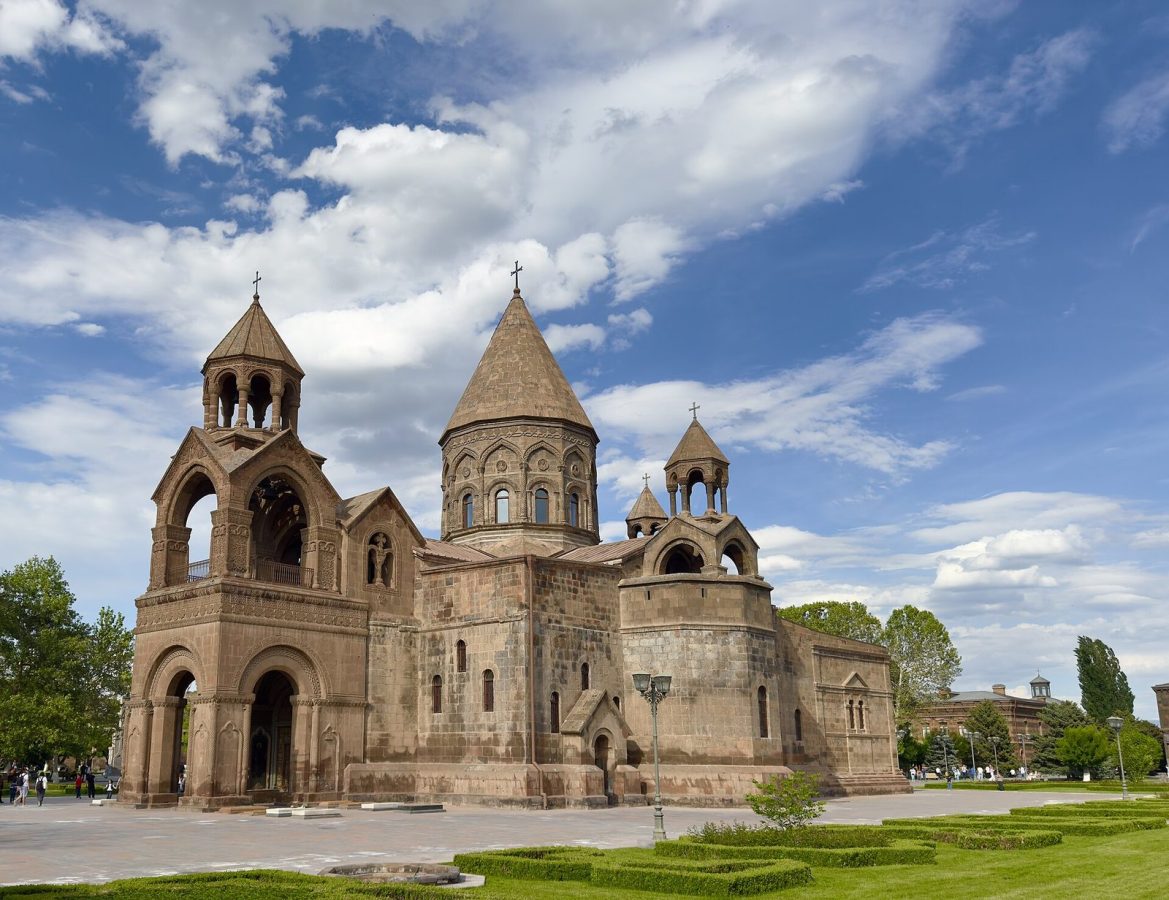
Photo: Well-read MountainMan, CC BY-SA 4.0
Entry to the cathedral and the grounds is free. The treasury museum, which holds the Holy Lance, a fragment said to be from Noah's Ark and relics of the apostles, charges a small ticket and is worth it. Etchmiadzin, officially Vagharshapat, lies twenty kilometres west of Yerevan, half an hour by marshrutka from the Kilikia terminal for a fraction of a dollar or by taxi for a few thousand dram.
Tours from Yerevan cost a moderate amount and usually add the ruins of Zvartnots on the way back, a seventh-century round church that collapsed in an earthquake, and sometimes a winery. Guides are not provided at the cathedral. Note that the cathedral itself was closed for a long restoration and reopened only recently, so check the current state before travelling. Marshrutkas leave when full rather than on a timetable, and the last one back to Yerevan runs in the early evening.
Live dates and prices from GetYourGuide. Free cancellation on most tickets.
Gregory the Illuminator founded a church here between 301 and 303, when Armenia became the first state to adopt Christianity, and the name means the descent of the Only-Begotten, after Gregory's vision of Christ striking the ground to mark the spot. The core of the present building dates from 483, with a dome on four free-standing pillars that set the pattern for Armenian architecture, and later additions include a bell tower of 1658 and rotundas over three of the apses. Frescoes by the Hovnatanian family cover the interior.
The complex is the Vatican of the Armenian Church: the residence of the Catholicos, a seminary, a printing house and three other early churches within walking distance, Saint Hripsime of 618 and Saint Gayane of 630 among them, all part of the same World Heritage listing. The altar of descent inside marks the spot of Gregory's vision, and excavations beneath it exposed a fire altar from the pagan temple that preceded the church. A separate open-air altar in the courtyard is used for the blessing of the holy oil, and a khachkar garden along the wall gathers cross-stones brought from across historic Armenia.
Open daily during daylight, with the museum keeping shorter hours and closing on Mondays. The main liturgy on Sunday morning is long, sung and worth attending; the blessing of the holy oil, held every seven years, draws Armenians from around the world. Summers on the Ararat plain are hot and the courtyard has little shade; winter is cold and clear, when Ararat itself is visible from the grounds.
Dress modestly, with shoulders covered; women are not required to cover their heads here. Photography is allowed outside and restricted inside. Allow ninety minutes for the cathedral, the museum and Saint Hripsime, and add Zvartnots on the road back to Yerevan. Zvartnots, on the road back, is open until early evening and the ruins photograph best with Ararat behind them in the late afternoon.
Yes. GetYourGuide lists one ticket or tour for Etchmiadzin Cathedral, with live dates and prices and free cancellation on most of them.
The cathedral stands 27 m high.
Zvartnots, on the road back, is open until early evening and the ruins photograph best with Ararat behind them in the late afternoon.
Entry to the cathedral and the grounds is free.
Dress modestly, with shoulders covered; women are not required to cover their heads here.
Allow ninety minutes for the cathedral, the museum and Saint Hripsime, and add Zvartnots on the road back to Yerevan.
Etchmiadzin Cathedral was founded in 303.
Etchmiadzin Cathedral is in Yerevan, Armenia. The map on this page shows the exact spot.
Yerevan, Armenia
Hayravank Monastery stands on a rocky headland on the western shore of Lake Sevan, Armenia, about an hour's drive…
1 ticket or tour
Yerevan, Armenia
Kecharis Monastery stands in the ski resort town of Tsaghkadzor, in central Armenia, about an hour's drive north…
1 ticket or tour
