Monastery & Abbey · Easingwold · United Kingdom
Byland Abbey
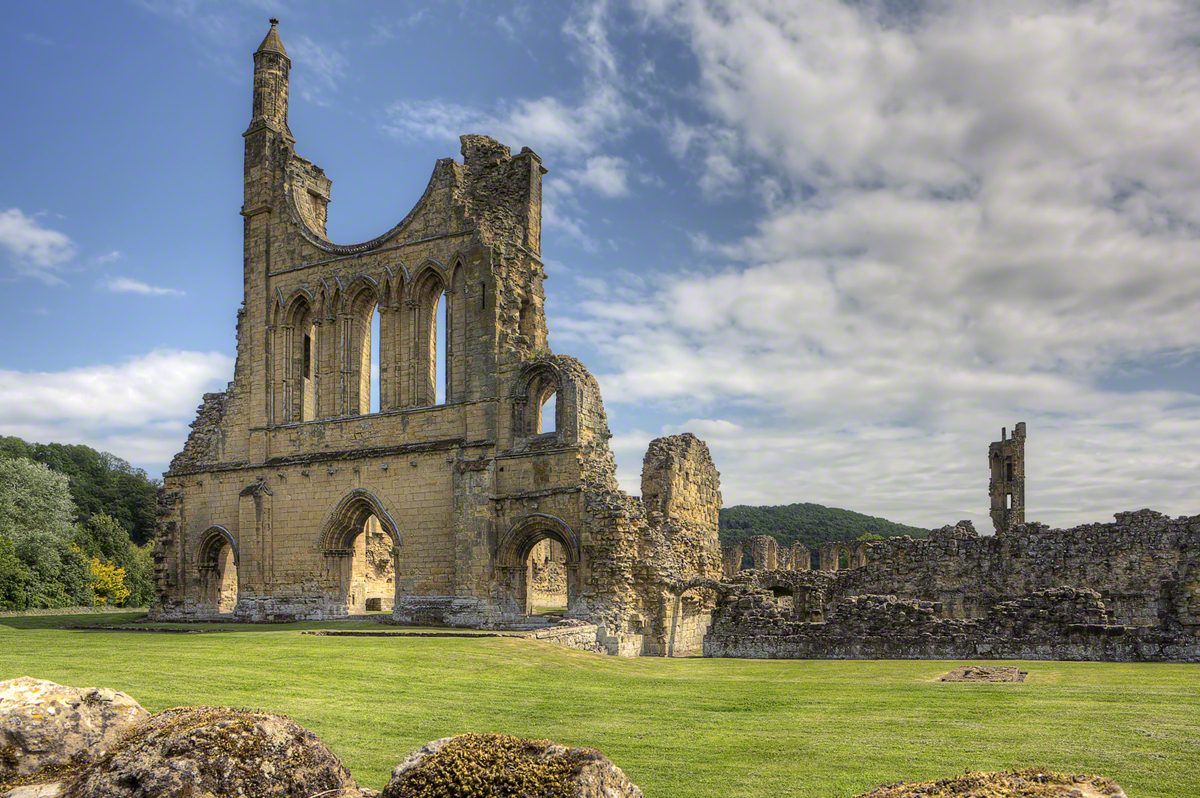
Photo: Antony McCallum, CC BY-SA 3.0
- Where
- Easingwold, United Kingdom
- Founded
- 1101
- Tickets
- 1 ticket or tour
Byland Abbey tickets: which one to buy
Byland Abbey stands in the countryside near the village of Coxwold, in North Yorkshire, England, on the edge of the North York Moors National Park, and it is managed by English Heritage, with a small admission fee. It is one of the great Cistercian abbeys of Yorkshire, less visited than Rievaulx and Fountains, and it is known for its rose window and its medieval floor tiles.
A car is the easiest way to reach it, and it is often combined with Rievaulx Abbey, about half an hour away, the town of Helmsley, Shandy Hall in Coxwold, the home of the novelist Laurence Sterne, and Newburgh Priory. The Abbey Inn, opposite the ruins, serves food and has rooms. The site has a small museum displaying carved stones. Opening days are limited, especially in winter, so check before visiting. English Heritage members enter free, and the site has a small car park.
Tickets and tours for Byland Abbey
Live dates and prices from GetYourGuide. Free cancellation on most tickets.
Visiting Byland Abbey: what to see
The abbey was founded by Cistercian monks who, after moving several times, settled here in 1177. The church, completed in the late twelfth century, was one of the largest and finest Cistercian churches in Britain, and its design influenced other buildings in northern England. After the dissolution of the monasteries in 1538, the abbey was abandoned and its stone was taken for building. Today, the most striking feature of the ruins is the west front, with the lower half of a huge rose window, about eight metres across, which inspired the rose window of York Minster. The abbey is also famous for its medieval glazed floor tiles, arranged in geometric patterns in green and yellow, which survive in place in parts of the church.
Visitors can see the remains of the cloister, the chapter house, the kitchens and the lay brothers' range, which give a sense of the abbey's size. The museum displays carved capitals, fragments of the rose window and tiles found during excavations. The church's nave was about a hundred metres long. The lay brothers' lane, a narrow passage between the cloister and the lay brothers' range, is unusual. The chapter house's pillars have carved bases. The abbey's water supply channels can be traced in the ruins. The site's information boards explain the life of the Cistercian monks and lay brothers. The west front's doorway and windows show the elegance of early Gothic design. The ruins are surrounded by fields and trees, with views of the Hambleton Hills. The Kilburn White Horse, cut into the hillside, can be seen from nearby.
Byland Abbey opening hours and the best time to go
The abbey is open on selected days, mainly from spring to autumn, with limited opening in winter. The North York Moors are beautiful in late summer, when the heather blooms, and in spring and autumn. The ruins are atmospheric in the evening light. Weekends bring more visitors, but the site is rarely crowded. Allow about forty-five minutes for the abbey, and combine it with a walk to Coxwold or a visit to Rievaulx Abbey. Rievaulx Abbey, about half an hour's drive, is one of the most complete Cistercian ruins in England, with a museum and terrace.
More tours and activities in Easingwold
Before you go
Can I book a ticket for Byland Abbey online?
Yes. GetYourGuide lists one ticket or tour for Byland Abbey, with live dates and prices and free cancellation on most of them.
What are the opening hours of Byland Abbey?
The abbey is open on selected days, mainly from spring to autumn, with limited opening in winter.
How long does a visit to Byland Abbey take?
Allow about forty-five minutes for the abbey, and combine it with a walk to Coxwold or a visit to Rievaulx Abbey.
When was Byland Abbey founded?
Byland Abbey was founded in 1101.
Where is Byland Abbey?
Byland Abbey is in Easingwold, United Kingdom. The map on this page shows the exact spot.