Church of the Nativity
9 km away
Entry is free and no ticket exists; the queue for the grotto is the cost.
1 ticket or tour
Shrine & Sanctuary · East Jerusalem · Palestine
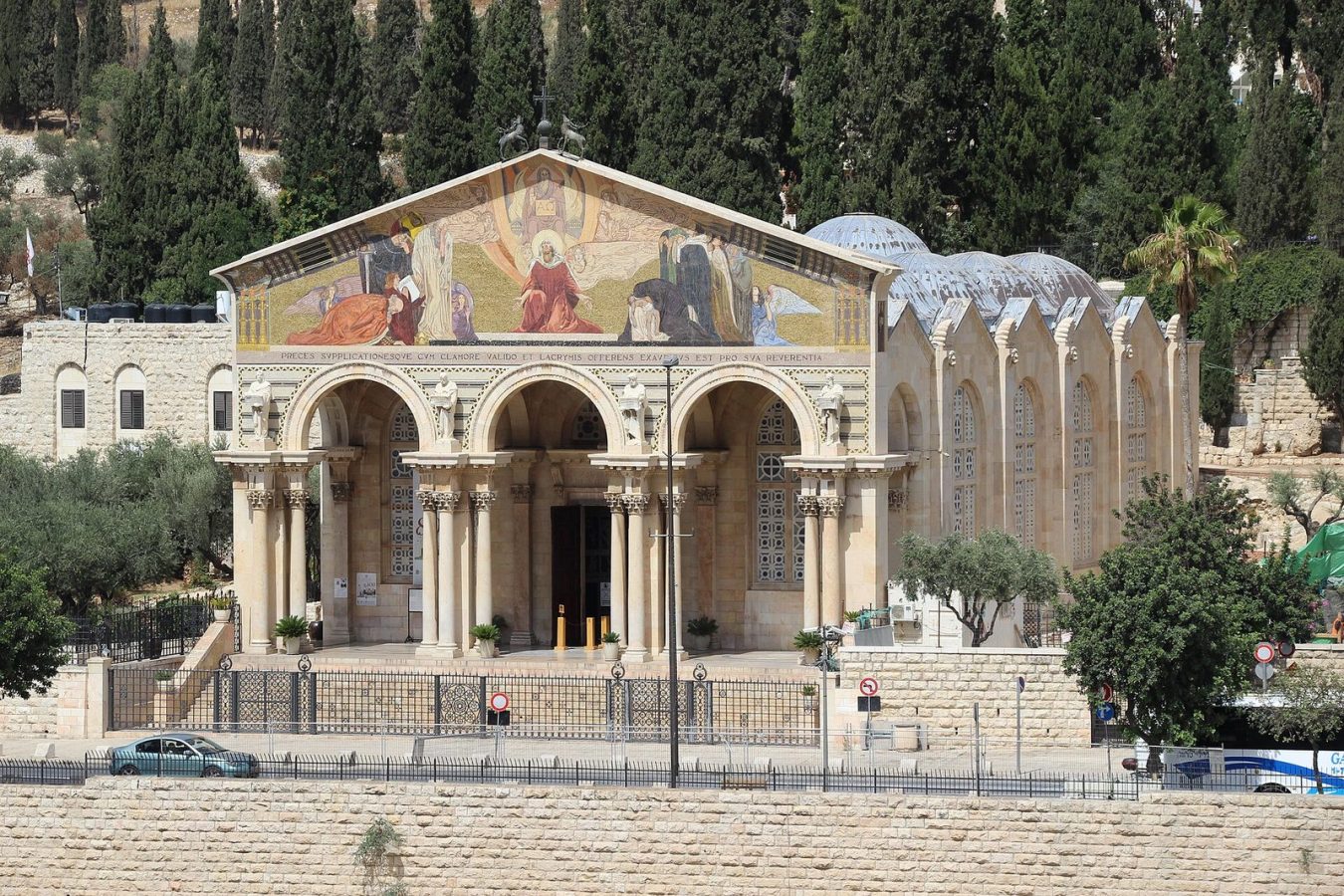
The church stands at the foot of the Mount of Olives, beside the garden of Gethsemane, about fifteen minutes downhill from the top and just across the valley from the old city walls of Jerusalem. Entry is free. Nearly every tour of the Mount of Olives ends here, having started at the viewpoint above and walked down past the Jewish cemetery, the chapel of the Ascension and the church with the golden onion domes;
that descent is the right way to do it, since the reverse is a hard climb. Groups are frequent and large, and the building is used for mass by visiting pilgrims throughout the day, so silence is asked for and enforced by the Franciscan staff. Independent visitors can take a bus or taxi to the top of the mount and walk down. The garden outside is open to look at but not to enter. Wraps are not provided here, so cover shoulders and knees before arriving.
Live prices from GetYourGuide for tours whose route includes this church. Free cancellation on most of them.
Two earlier churches stood here, a Byzantine basilica of the fourth century and a crusader chapel, and the foundations of both were found during excavation; the present building, raised between 1919 and 1924, incorporates them. Antonio Barluzzi designed it, and it is his masterpiece. The point of the design is darkness: the windows are glazed with violet alabaster, the twelve small domes are painted with night skies, and the whole interior is kept dim to evoke the agony in the garden before the arrest.
In front of the altar lies a flat slab of exposed bedrock, enclosed by a low wrought-iron crown of thorns, on which Jesus is said to have prayed. Twelve nations paid for the domes and their coats of arms are set into each, which gives the church its usual name. Outside, the garden holds olive trees of great age, several of them dated by radiocarbon to the twelfth century or earlier. Mosaics in the three apses show the agony, the betrayal and the arrest, worked in muted colours to suit the light.
Early morning is the only reliable way to find the church quiet; groups arrive from about nine and continue until closing, and there is a long midday break. Holy Week transforms the place: the Palm Sunday procession comes down the mount past the door, and on Holy Thursday the church stays open into the night for a vigil, which is the most atmospheric time it can be seen. Spring and autumn are the comfortable seasons;
summer is hot and the walk down the mount is exposed, while winter can be cold and wet. The valley below is a busy road with little shade. Security arrangements in Jerusalem change and access routes can close at short notice, so allow slack. Twenty minutes inside is enough to sit, and the view of the old city walls from the terrace outside is the one everybody photographs. A tomb traditionally identified as that of Mary lies a short walk downhill and is entered by a long stone stair.
9 km away
Entry is free and no ticket exists; the queue for the grotto is the cost.
1 ticket or tour
378 km away
Entry to the monastery grounds and the church is free; the museum, which holds the icons and a selection of…
5 tickets & tours
Yes. GetYourGuide sells tickets and guided tours whose route includes Church of All Nations; live prices are shown on this page.
The garden outside is open to look at but not to enter.
Wraps are not provided here, so cover shoulders and knees before arriving.
Church of All Nations was founded in 1924.
Church of All Nations is in East Jerusalem, Palestine. The map on this page shows the exact spot.