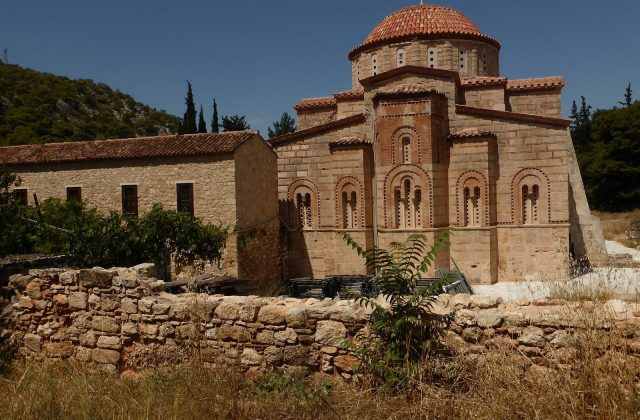
Daphni Monastery
34 km away
Entry is free, which is unusual for a Greek UNESCO site, and there is no ticket office;
1 ticket or tour
The monastery stands on the slope above the road that crosses Aegina, and almost everyone arrives by ferry from Piraeus, which takes forty minutes on the fast boat and a little over an hour on the slow one. From the port it is a short bus or taxi ride. Organised day trips from Athens combine the monastery with the temple of Aphaia on the far side of the island and the abandoned town of Paleochora on the hill opposite, and that combination is the best shape for a day here, since the three sites are within a few minutes of each other and cover three quite different periods.
Entry is free and donations are usual. Dress rules are enforced at the gate, with long skirts lent to women, and the nuns ask visitors not to photograph inside the shrine. Pistachio stalls along the road are the island's other speciality and are not a tourist invention. Buses from the port meet most arriving ferries, and the fare is a fraction of what the waiting taxis quote.
Live prices from GetYourGuide for tours whose route includes this church. Free cancellation on most of them.
Nektarios, a bishop who had been pushed out of office in Egypt and spent his later years in Greece, refounded a ruined convent here in 1904 and lived at it until his death in 1920. He was canonised in 1961 and is among the most widely venerated modern saints in the Orthodox world, credited with healings by pilgrims who come from across Greece and well beyond it. The site has two distinct parts.
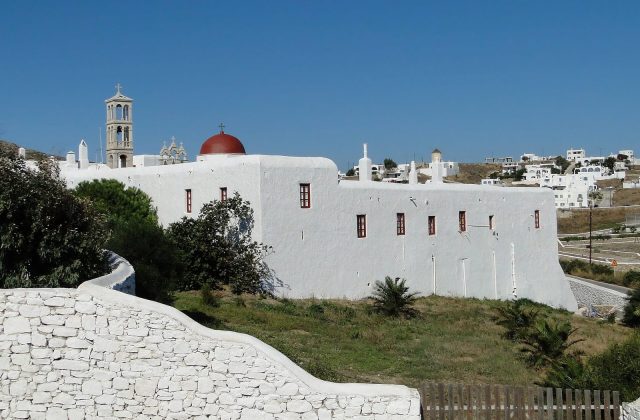
The old monastery buildings are small, white and domestic, with the saint's cell kept as he left it and a chapel holding his tomb; pilgrims press their ears to the marble. Above and beside them stands the newer church, built through the second half of the twentieth century on a very large scale, with a broad dome, pale marble and an interior still being filled with mosaic and painted decoration. It is among the largest churches in the Balkans and was designed to hold the crowds that the old buildings never could.
The feast day on the ninth of November is the great occasion, when boats run extra services from Piraeus and tens of thousands of pilgrims fill the road up from the port; it is extraordinary and entirely unsuited to casual sightseeing. Summer weekends bring Athenian families to the island and the ferries are full, while weekdays in May, June and September are calm and the heat is manageable.
There is little shade on the approach and the marble forecourt reflects the sun hard, so a hat matters. The site opens early and closes in the middle of the day in some seasons. Paleochora, a hillside of some thirty surviving chapels left from the medieval town, is a twenty-minute walk across the road and needs proper shoes. Ferries back to Athens fill in the late afternoon in summer, so buy the return leg when you arrive.
34 km away
Entry is free, which is unusual for a Greek UNESCO site, and there is no ticket office;
1 ticket or tour
38 km away
The Monastery of Kaisariani stands in a pine forest on the slopes of Mount Hymettus, about five kilometres east of…
1 ticket or tour
173 km away
Entry is free with a donation box inside, and a small museum of vestments and icons occupies a room off the courtyard.
1 ticket or tour
Yes. GetYourGuide sells tickets and guided tours whose route includes Saint Nectarios Monastery, Aegina; live prices are shown on this page.
Entry is free and donations are usual.
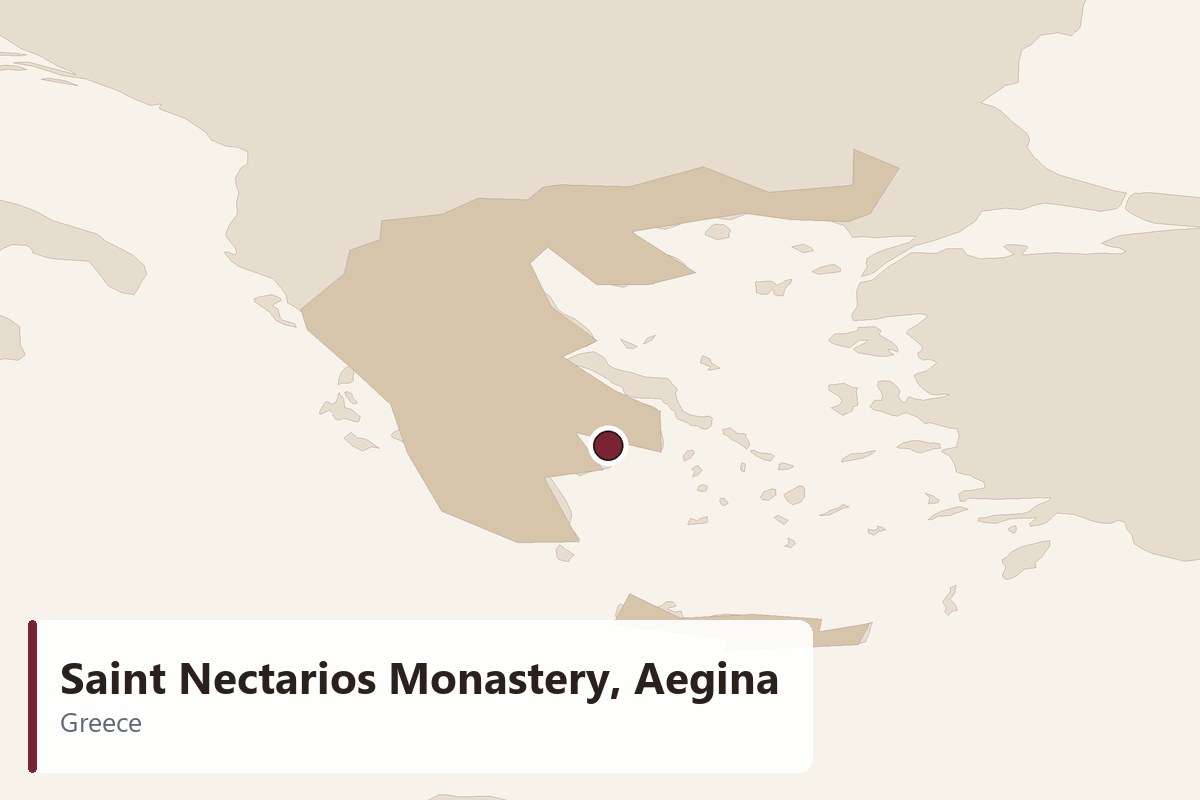
Saint Nectarios Monastery, Aegina is in Aegina, Greece. The map on this page shows the exact spot.