Monastery & Abbey · Rostuse · North Macedonia
Saint Jovan Bigorski Monastery
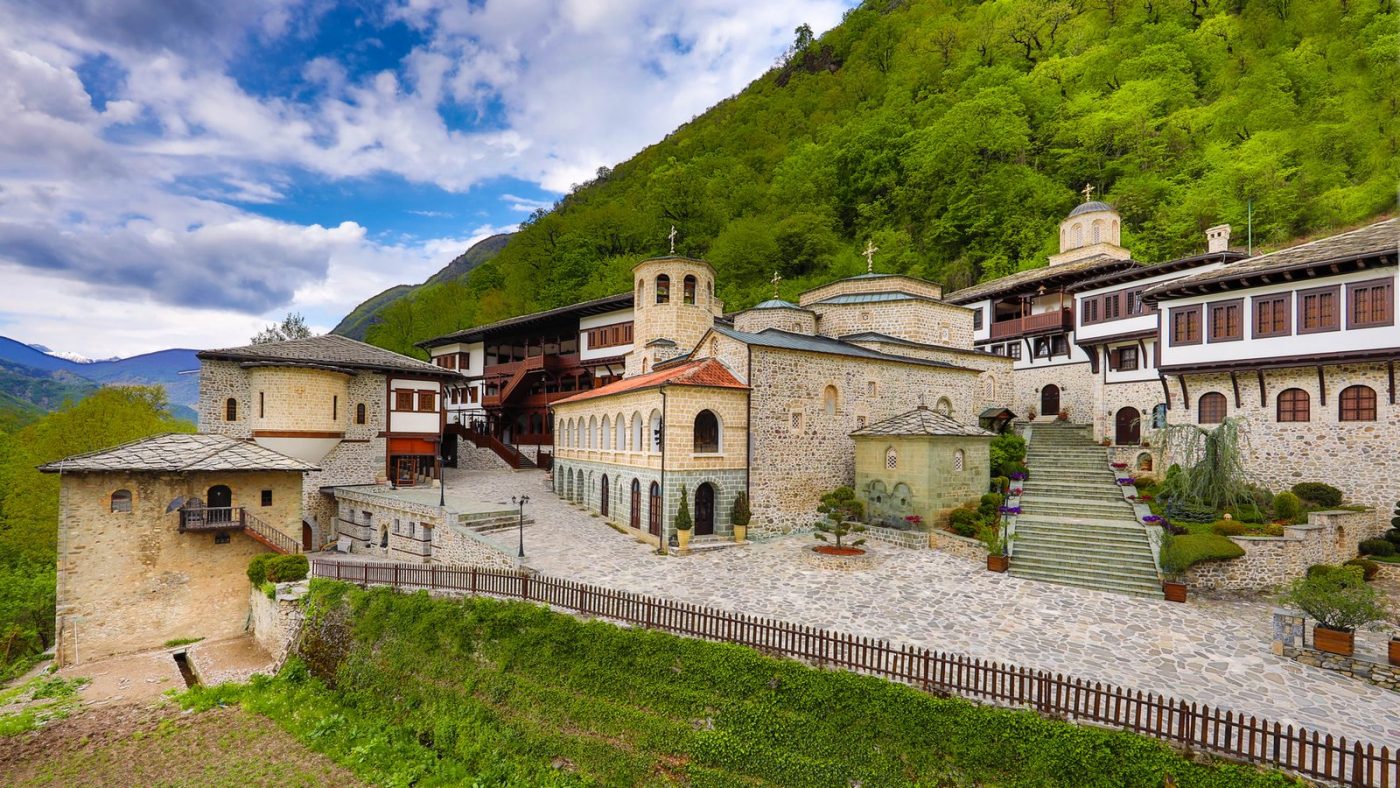
Photo: BigorskiMonastery, CC BY-SA 4.0
- Where
- Rostuse, North Macedonia
- Founded
- 1001
- Tickets
- 1 ticket or tour
- Website
- bigorski.org.mk
Saint Jovan Bigorski Monastery tickets: which one to buy
Bigorski sits on a forested slope above the road between Debar and Gostivar, inside the Mavrovo national park, and it is a drive rather than a walk. Almost everyone arrives on a day trip from Skopje or Ohrid, and the good itineraries pair the monastery with the mountain village of Galicnik, the Mavrovo reservoir with its half-submerged church, and a stop for trout. Entry is free and donations are expected.
This is a working male monastery with a full daily round of services, not a museum, so the experience depends heavily on when you arrive and on the monk who happens to be free to show you round; some speak English well. Dress rules are enforced at the gate, with covered shoulders and knees and headscarves for women, and wraps are lent. Photography inside the church is restricted and the restriction is taken seriously. Guest rooms exist for pilgrims and can be arranged in advance by writing to the monastery.
Tickets and tours for Saint Jovan Bigorski Monastery
Live dates and prices from GetYourGuide. Free cancellation on most tickets.
Visiting Saint Jovan Bigorski Monastery: what to see
The foundation is traditionally dated to 1020, and the monastery takes its name from the porous bigor stone of the hillside. Ottoman-era destruction and repeated rebuilding mean the present buildings are mostly of the eighteenth and nineteenth centuries, arranged as galleried wooden ranges around a courtyard with the church at the centre and the valley dropping away below. What everyone comes for is the iconostasis, carved between 1829 and 1835 by Mijak craftsmen from the villages nearby, including Petre Filipovski-Garkata and Makarij Frckovski.
It is a wall of walnut worked into several hundred human and animal figures, biblical scenes, vines and birds, cut so deep in places that the wood is effectively lace. A related workshop produced the equally famous screen at Saint Saviour in Skopje, and comparing the two is a standing argument among Macedonians. The monastery also holds a reliquary said to contain the forearm of John the Baptist. A serious fire in 2009 destroyed part of the residential wing, which has since been rebuilt.
Saint Jovan Bigorski Monastery opening hours and the best time to go
Late spring and early autumn are the best seasons, when the road is clear, the forest is at its most striking and the day trips are less crowded. Winter brings snow and the area works as a ski region, with Mavrovo's slopes twenty minutes away, so the monastery can be combined with a ski day. Services begin very early and the evening liturgy is the most atmospheric time to be present, though visitors should stand at the back and stay quiet.
The Galicnik wedding festival in mid-July fills every road in the district and needs planning around, in either direction. There is no real village at the monastery, so bring water and expect a limited choice of food until you reach the lake. The drive from Skopje takes roughly two hours each way on mountain roads, which means a full day rather than a morning, and the last stretch is narrow enough that a local driver is worth the money.
More tours and activities in Rostuse
Before you go
Can I book a ticket for Saint Jovan Bigorski Monastery online?
Yes. GetYourGuide lists one ticket or tour for Saint Jovan Bigorski Monastery, with live dates and prices and free cancellation on most of them.
Is Saint Jovan Bigorski Monastery free to visit?
Entry is free and donations are expected.
Is there a dress code at Saint Jovan Bigorski Monastery?
Dress rules are enforced at the gate, with covered shoulders and knees and headscarves for women, and wraps are lent.
When was Saint Jovan Bigorski Monastery founded?
Saint Jovan Bigorski Monastery was founded in 1001.
Where is Saint Jovan Bigorski Monastery?
Saint Jovan Bigorski Monastery is in Rostuse, North Macedonia. The map on this page shows the exact spot.