
Snagov Monastery
Bucharest, Romania
Snagov Monastery stands on an island in Lake Snagov, about forty kilometres north of Bucharest, Romania, and it is…
11 tickets & tours
Monastery & Abbey · Bucharest · Romania
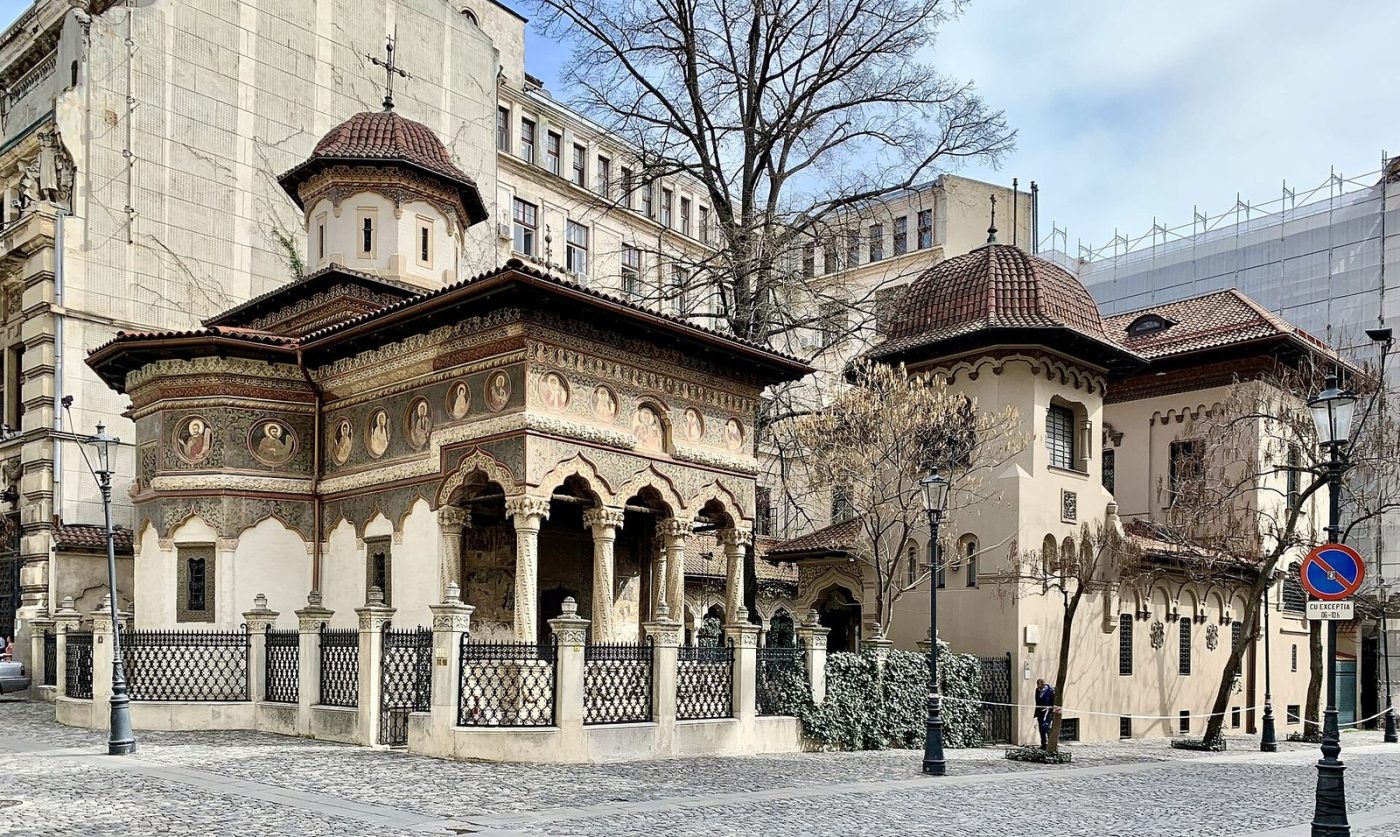
Entry is free, with a donation box by the door and candles for sale in the courtyard. The monastery is tiny, a single church and a small cloister wedged between buildings on a lane in the old centre of Bucharest, two minutes from the Old Court and the Manuc's Inn. No ticket, no guide and no queue. City walking tours include it and cost a moderate amount;
the area around it, Lipscani, is the restaurant and bar quarter, which makes an evening visit easy to combine. The nuns maintain a library of Byzantine music, the largest in Romania, and their choir sings the services; those are free to attend and are the reason many visitors come back. Nothing requires booking. The monastery publishes its liturgical schedule at the gate, and the Sunday morning service is the one most visitors attend.
Live dates and prices from GetYourGuide. Free cancellation on most tickets.
A Greek monk named Ioannikios built the church in 1724 with the income from an inn he ran on the same plot, and named the monastery after Stavropolis, the see to which he was later appointed. The inn and most of the outbuildings were demolished at the end of the nineteenth century, leaving the church alone until the architect Ion Mincu rebuilt a cloister around it in the 1900s. It is the finest surviving example of the Brancovenesc style, a Wallachian synthesis of late Byzantine, Ottoman and Italian Renaissance detail: a stone porch with carved columns and trilobed arches, frescoed walls inside and out, and an iconostasis of painted wood.
The courtyard is lined with carved stone fragments and old tombstones rescued from churches demolished under Ceausescu. The whole thing takes ten minutes to see and stays with visitors far longer than the size suggests. The library holds several thousand volumes of Byzantine music and theology, and the nuns have restored and republished chant manuscripts that had gone out of use.
Open daily from early morning to evening, with services in the morning and evening; visitors may stand at the back. The nuns sing in Byzantine chant, which is unaccompanied and unlike western choral music, and the Sunday liturgy is long. Bucharest is hot in July and August and the courtyard has shade. The lanes around the monastery are noisy at night, though the courtyard itself stays quiet. Dress modestly, with shoulders and knees covered; scarves for women are available at the door.
Photography is allowed in the courtyard and not inside during services. Allow twenty minutes, an hour if you sit in the courtyard. The Old Princely Court and the Romanian bank's palaces are all within a few minutes. Bucharest's old centre is largely pedestrianised and the lanes around the church fill with tables from midday onwards. Winter mornings are the quietest, and the courtyard with its stone fragments is at its best under a light fall of snow.
Yes. GetYourGuide lists one ticket or tour for Stavropoleos Monastery, with live dates and prices and free cancellation on most of them.
Entry is free, with a donation box by the door and candles for sale in the courtyard.
Dress modestly, with shoulders and knees covered; scarves for women are available at the door.
Allow twenty minutes, an hour if you sit in the courtyard.
Stavropoleos Monastery was founded in 1724.
Stavropoleos Monastery is in Bucharest, Romania. The map on this page shows the exact spot.
Bucharest, Romania
Snagov Monastery stands on an island in Lake Snagov, about forty kilometres north of Bucharest, Romania, and it is…
11 tickets & tours