Cuenca Cathedral
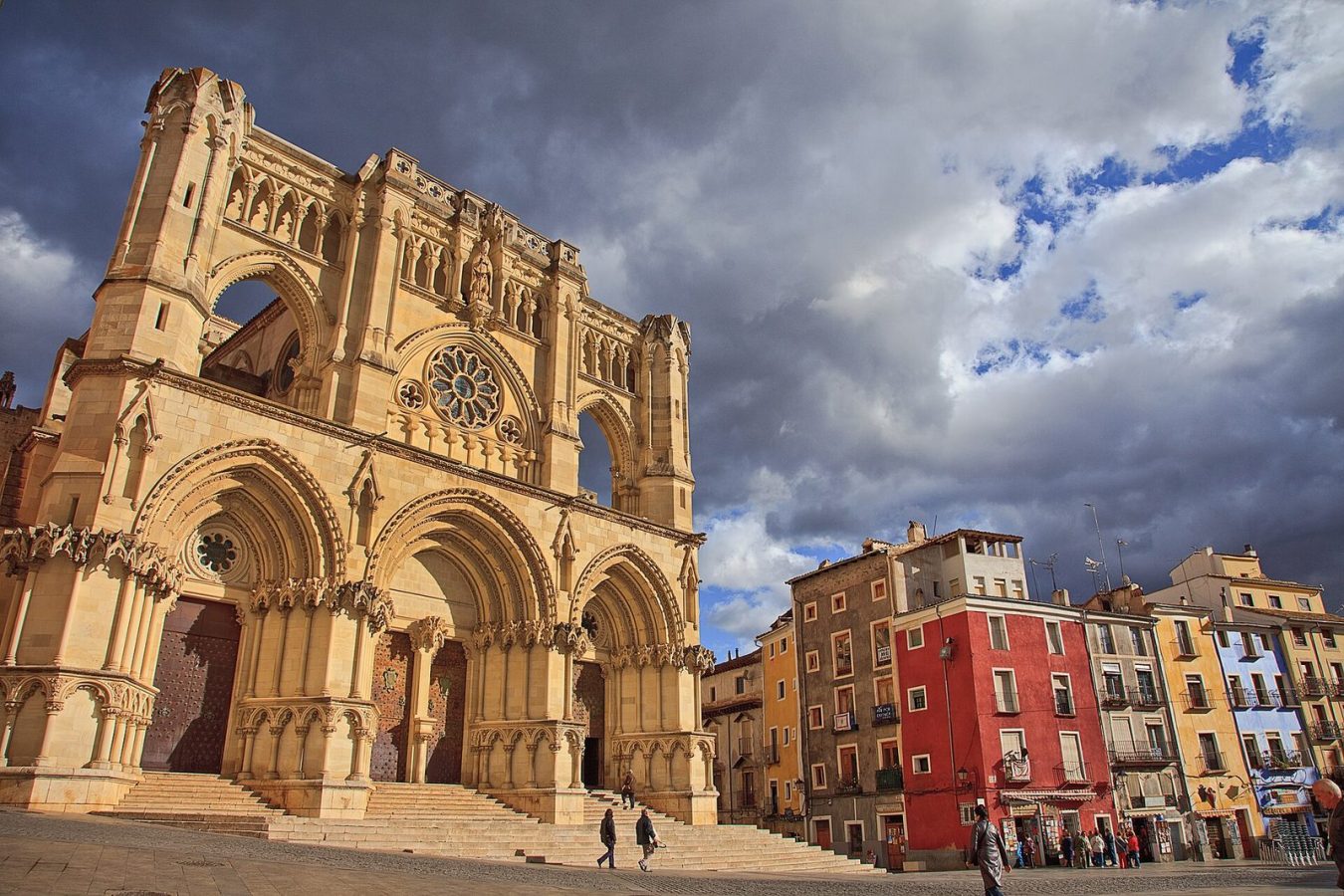
Photo: Tomás Fano, CC BY-SA 2.0
- Type
- Cathedral
- Founded
- 1183
- Tickets
- 2 tickets and tours
- Website
- catedralcuenca.es/inicio
Cuenca Cathedral tickets: which one to buy
Cuenca Cathedral stands on the Plaza Mayor in the old town of Cuenca, Castile-La Mancha, Spain, about an hour from Madrid by high-speed train, and a ticket is required, with an audio guide included; a separate ticket gives access to the triforium and the upper walkways, with close views of the modern stained glass. Cuenca's old town, perched on a narrow ridge between two river gorges, is a UNESCO World Heritage Site, and it is famous for its Hanging Houses, the Casas Colgadas, built over the edge of the cliff, one of which holds the Museum of Abstract Spanish Art.
Walking tours of Cuenca combine the cathedral with the Hanging Houses, the San Pablo bridge over the Huécar gorge and the viewpoints. The old town is steep, and buses run from the new town and the station. The cathedral is active, and visiting pauses during services. The bus from the train station to the old town stops at the Plaza Mayor, beside the cathedral.
2 tickets and tours for Cuenca Cathedral
Live dates and prices from GetYourGuide. Free cancellation on most tickets.
Visiting Cuenca Cathedral: what to see
The cathedral was built between 1182 and 1270 on the site of a mosque, after the Christian conquest of Cuenca by King Alfonso VIII, and it is one of the first Gothic cathedrals in Spain, influenced by French and Norman architecture. Its facade was rebuilt in the twentieth century after the collapse of the tower in 1902, and it was left unfinished, giving the front a strange, incomplete appearance. Inside, the cathedral has a mixture of Gothic, Renaissance and baroque chapels, a large high altar designed by Ventura Rodríguez, a Renaissance arch, the Arco de Jamete, and carved choir stalls. The most unexpected feature is the stained glass: in the 1990s, contemporary Spanish artists, including Gustavo Torner and Gerardo Rueda, created abstract stained glass windows that fill the cathedral with modern colours.
The treasury museum displays silverwork and paintings, including works by El Greco. The cathedral's chapels were decorated by the city's noble families, and they hold tombs, altarpieces and grilles. The Arco de Jamete, a Renaissance arch, leads to the cloister. The high altar is decorated with marble and bronze. The choir's carved stalls are Gothic. The treasury museum displays works by El Greco and gold and silver objects. The modern stained glass windows use strong colours and abstract shapes. The cathedral's facade is unusual, with a neo-Gothic design left incomplete. The triforium walkways offer views of the nave from above.
Cuenca Cathedral opening hours and the best time to go
The cathedral is open daily, with shorter hours in winter. Cuenca is busy on weekends with visitors from Madrid, and weekdays are quieter. Holy Week is famous for its processions, and the Religious Music Week, one of the most important sacred music festivals in Spain, is held then. Summer is warm, and winter is cold, with occasional snow. The views of the Hanging Houses from the San Pablo bridge are best in the late afternoon. Allow about an hour for the cathedral, and walk to the Hanging Houses and the bridge. The Museum of Abstract Spanish Art, in one of the Hanging Houses, holds works by leading Spanish abstract artists.
More tours and activities in Cuenca
Before you go
Can I book a ticket for Cuenca Cathedral online?
Yes. GetYourGuide lists 2 tickets and tours for Cuenca Cathedral, with live dates and prices and free cancellation on most of them.
What are the opening hours of Cuenca Cathedral?
The cathedral is open daily, with shorter hours in winter.
How long does a visit to Cuenca Cathedral take?
Allow about an hour for the cathedral, and walk to the Hanging Houses and the bridge.
When was Cuenca Cathedral founded?
Cuenca Cathedral was founded in 1183.
Where is Cuenca Cathedral?
Cuenca Cathedral is in Cuenca, Spain. The map on this page shows the exact spot.