Monastery & Abbey · Cluny · France
Cluny Abbey
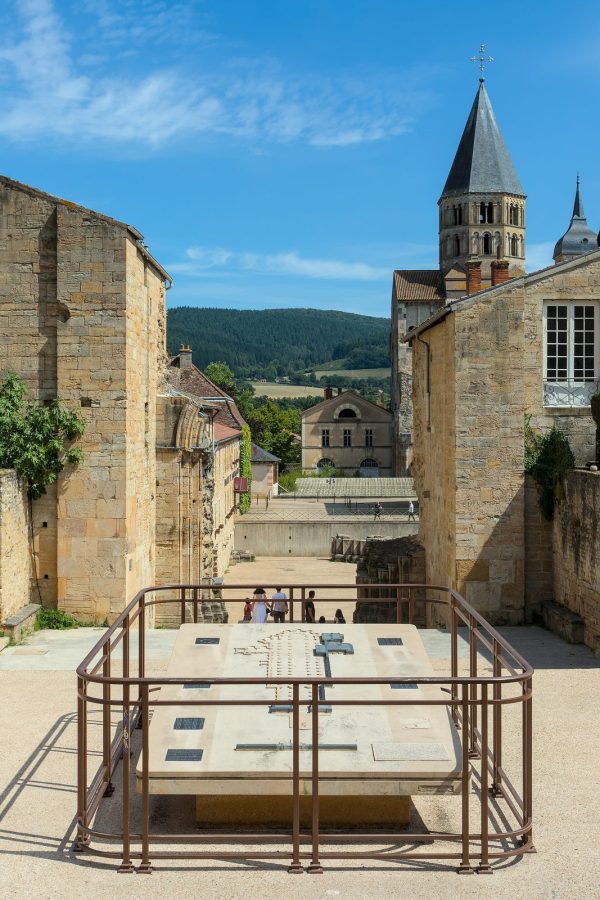
Photo: Benjamin Smith, CC BY-SA 4.0
- Founded
- 909
- Tickets
- 2 tickets and tours
- Website
- cluny-abbaye.fr/en
Cluny Abbey tickets: which one to buy
Cluny Abbey stands in the town of Cluny, in Burgundy, France, about eighty kilometres north of Lyon, and a ticket is required, covering the remains of the abbey, a museum and a virtual reconstruction; the site is managed by the Centre des Monuments Nationaux. Cluny was once the largest church in the Christian world, and although most of it was destroyed, the remains and the digital reconstructions, including augmented reality tablets, give a sense of its former size.
Walking tours of Cluny combine the abbey with the Tour des Fromages, a tower with a view over the abbey ruins, the national stud farm, the Haras National, and the medieval houses of the town. Cluny is about half an hour from Mâcon by bus, and a car is useful to explore the Burgundy wine region and its Romanesque churches nearby. The augmented reality tablets are included in the ticket and should be collected at the entrance.
2 tickets and tours for Cluny Abbey
Live dates and prices from GetYourGuide. Free cancellation on most tickets.
Visiting Cluny Abbey: what to see
The Benedictine abbey was founded in 910 by William, Duke of Aquitaine, and it became the centre of a vast network of more than a thousand monasteries across Europe, the Cluniac order, independent of local bishops and answerable only to the pope. Its abbots were among the most powerful figures of the medieval world. The third abbey church, known as Cluny III, was begun in 1088 and completed in 1130, and at 187 metres long it was the largest church in the world until Saint Peter's in Rome was rebuilt in the sixteenth century. After the French Revolution, the abbey was sold and largely demolished for building stone between 1798 and 1823.
Today only the southern arm of the great transept survives, with its octagonal bell tower, the Clocher de l'Eau Bénite, rising above the town, along with parts of the monastic buildings, the abbot's palace, the flour store and eighteenth-century cloisters. The virtual reconstruction shows the abbey church as it looked in the Middle Ages, with its five naves and seven towers. The museum displays capitals and sculptures from the church, including carvings of the tones of music. The flour store has a vaulted ground floor and a wooden roof. The abbot's palace, built in the fifteenth century, now houses the Museum of Art and Archaeology. The eighteenth-century cloisters are part of the École des Arts et Métiers. The remains of the great transept give a sense of the church's extraordinary height.
Cluny Abbey opening hours and the best time to go
The abbey is open daily, with shorter hours in winter. Burgundy is pleasant from spring to autumn, and the grape harvest in September and October brings activity to the wine villages. Summer brings concerts and events to the abbey. The Tour des Fromages is best climbed on clear days for the view over the ruins. Cluny's national stud farm hosts equestrian events. Allow about an hour and a half for the abbey and museum, and walk through the medieval town. The Romanesque church of Paray-le-Monial, a smaller version of Cluny III, is about an hour's drive west.
More tours and activities in Cluny
Before you go
Can I book a ticket for Cluny Abbey online?
Yes. GetYourGuide lists 2 tickets and tours for Cluny Abbey, with live dates and prices and free cancellation on most of them.
What are the opening hours of Cluny Abbey?
The abbey is open daily, with shorter hours in winter.
How long does a visit to Cluny Abbey take?
Allow about an hour and a half for the abbey and museum, and walk through the medieval town.
When was Cluny Abbey founded?
Cluny Abbey was founded in 909.
Where is Cluny Abbey?
Cluny Abbey is in Cluny, France. The map on this page shows the exact spot.