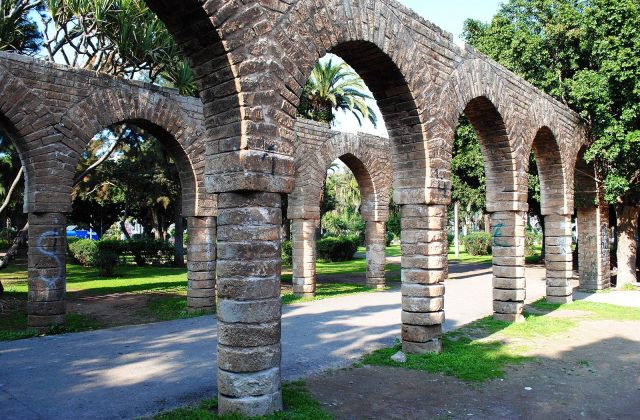
Casablanca Cathedral
Casablanca, Morocco
This is a former church rather than a working one, and visits are correspondingly informal.
No online ticket
Church · Casablanca · Morocco
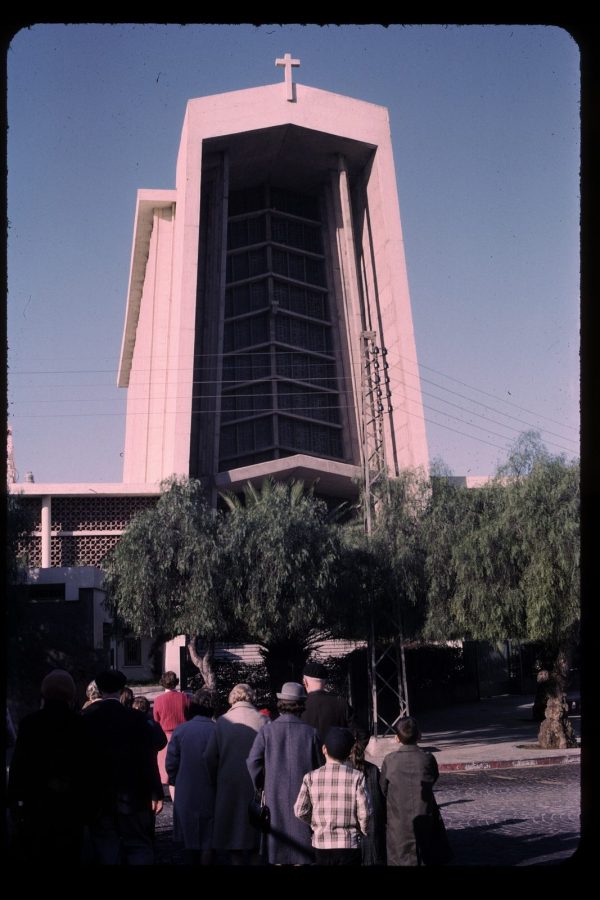
Photo: AndrewEick, CC BY 2.0
This is a working parish church rather than a monument, standing in a residential quarter of Casablanca away from the colonial centre, and it is free to enter. Opening hours are tied to the parish and are most reliable in the morning and around evening mass; a caretaker is usually present. Architecture tours of the city that go beyond the 1920s boulevards include it as the major example of Moroccan modernism from the 1950s, and that is the right context in which to see it.
Visitors interested in stained glass should treat it as the destination rather than an addition, since the glass here is on a scale found in few churches anywhere. The congregation today is largely made up of residents from sub-Saharan Africa and of foreign workers, and services are lively and well attended. Combine it with the deconsecrated art deco church nearer the park for a coherent afternoon. Taxis will not always know the church by name, so give the name of the surrounding quarter as well.
Live prices from GetYourGuide for tours whose route includes this church. Free cancellation on most of them.
The church was built in 1954 to a design by Achille Dangleterre, with Gaston Zimmer as engineer, in concrete and in an uncompromising modernist idiom: a long low approach, a bare structural frame, and a wide hall with no columns interrupting the view of the altar. It is a building of its exact moment, put up in the last years of the French protectorate. What transforms it is the glass.
Gabriel Loire, the master glassmaker of Chartres, filled the side walls with vast panels of thick faceted glass set in concrete, a technique he helped develop, and the subjects include Moroccan scenes and figures alongside the expected Marian imagery. In strong sunlight the interior fills with blocks of deep blue and red that move across the floor through the day, and the plainness of the concrete is exactly what makes the effect work. The glass covers something close to eight hundred square metres, which is among the largest single commissions of its kind.
Midday and the early afternoon give the strongest light through the glass, which is the opposite of the usual advice for churches and the reason to come then. Sunday mass is the surest time to find the doors open, and visitors are welcome to stay. Casablanca is mild through the winter and humid in August, and this quarter is a short taxi ride from the centre. Christmas and Easter fill the church.
The city has no great concentration of sights, so a day here works best as a route between a few scattered buildings: the great mosque on the seafront with its guided visits at fixed hours, the art deco centre, the Habous quarter and this church. Taxis are cheap and metered. Twenty-five minutes inside is enough unless the sun is out, in which case it will be longer. The parish keeps a noticeboard by the door listing mass times in French and in several African languages.
Yes. GetYourGuide sells tickets and guided tours whose route includes Notre-Dame de Lourdes Church; live prices are shown on this page.
Opening hours are tied to the parish and are most reliable in the morning and around evening mass; a caretaker is usually present.
This is a working parish church rather than a monument, standing in a residential quarter of Casablanca away from the colonial centre, and it is free to enter.
Notre-Dame de Lourdes Church is in Casablanca, Morocco. The map on this page shows the exact spot.
Casablanca, Morocco
This is a former church rather than a working one, and visits are correspondingly informal.
No online ticket