Blaca hermitage
71 km away
The Blaca Hermitage clings to a rocky slope in a remote valley on the south side of the island of Brač, Croatia, and a…
1 ticket or tour
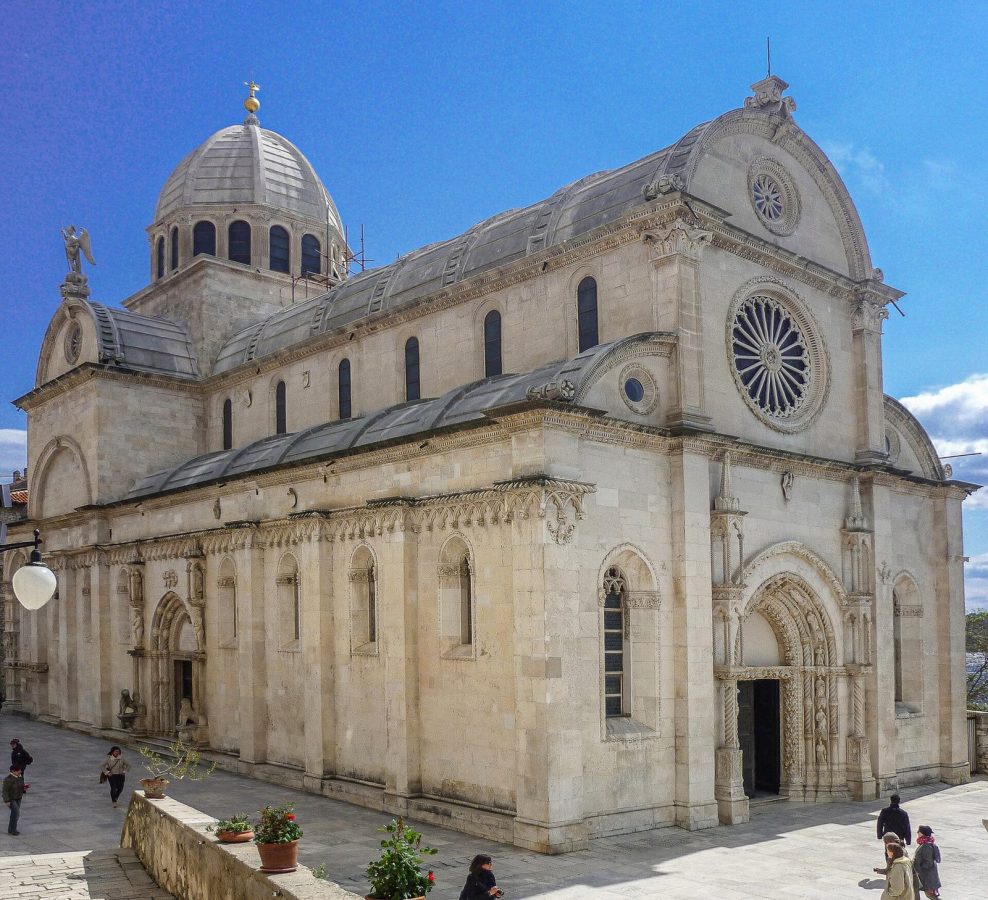
Photo: SchiDD, CC BY-SA 4.0
Sibenik is quieter than Split or Dubrovnik and the cathedral is its reason for existing on most itineraries. Entry is ticketed, inexpensive and bought at the door; there is no timed system and queues are short outside the peak weeks. Guided tours of the old town start on the square in front and continue up through the stepped lanes to the fortress above, which is the right order, since the view down onto the cathedral roof from the walls explains the building better than anything said inside it.
Day trips from Split and from Zadar include the town on the way to the Krka waterfalls, usually with about ninety minutes here, which is enough but not generous. Anyone interested in architecture should come independently and stay longer. Concerts are held in the fortress in summer and on the square in front of the cathedral during the children's festival, and both are ticketed separately.
Live prices from GetYourGuide for tours whose route includes this church. Free cancellation on most of them.
The cathedral was built between 1431 and 1536 entirely from stone, with no brick, no timber and no mortar in the vaulting: the roof and dome are assembled from interlocking slabs cut to shape, a technique with no real parallel, devised because the money for conventional construction was never there. Two architects shaped it. Juraj Dalmatinac, who took over in 1441, gave it the trefoil front, the baptistery and the frieze that everyone photographs: seventy-one carved heads running round the outside of the apses, ordinary faces of fifteenth-century Dalmatians rather than saints, some of them plainly portraits and one or two plainly unflattering.
Nikola Firentinac finished the work after 1475 and built the dome and barrel roof in the same slab technique. The baptistery inside, a small vaulted chamber carved with cherubs and shells, is the finest interior on the Adriatic coast. UNESCO listed the building in 2000. A ninth head on the northern apse wears a turban, a reminder of how close the Ottoman frontier ran when the carving was cut.
The cathedral is open through the day with a break at lunch in some seasons and closes during services. Morning sun lands on the west front and the frieze of heads on the apse is best in the afternoon, so a visit that covers both takes some planning or two passes. Summer brings heat reflected off white stone and very little shade on the square. May, June and September are the comfortable months.
The international children's festival at the end of June fills the town with performances and is charming rather than disruptive. Sibenik has two hill fortresses reachable on foot, one of them with a garden and a cafe, and the Krka national park is half an hour inland. Cruise ships cannot dock in the narrow channel in any number, which is why the town stays calmer than its neighbours. Forty minutes inside is enough, and the exterior deserves as long again.
71 km away
The Blaca Hermitage clings to a rocky slope in a remote valley on the south side of the island of Brač, Croatia, and a…
1 ticket or tour
217 km away
The Franciscan monastery stands immediately inside the Pile gate at the western end of the Stradun, the main street of…
1 ticket or tour
226 km away
The Sanctuary of Saint Pio of Pietrelcina is in San Giovanni Rotondo, on the Gargano promontory in Puglia, and it is…
1 ticket or tour
Yes. GetYourGuide sells tickets and guided tours whose route includes Šibenik Cathedral; live prices are shown on this page.
The cathedral is open through the day with a break at lunch in some seasons and closes during services.
Šibenik Cathedral was founded in 1431.
Šibenik Cathedral is in Šibenik, Croatia. The map on this page shows the exact spot.